Thursday, 29 September 2011
I love notes .
One of the things that have always intrigued me is the art of taking notes .
Blogs and immediate publication certainly raises really serious issues for artists around questions of copyright.

Friday, 23 September 2011
Ascemic Writing


"In Tang Dynasty China, ca. 800 CE, two men pushed cursive brush calligraphy to the point of illegibility. "Crazy" Zhang Xu (one of the Eight Immortals of the Wine Cup) used to get excited after drinking wine, and write exuberant but illegible cursive. The younger "mad monk" Huai Su also found renown as a writer of loose cursive calligraphy."

Automatic Writing

"Psychology professor Théodore Flournoy investigated the claim by 19th-century medium Hélène Smith (Catherine Müller) that she did automatic writing to convey messages from Mars in Martian language. Flournoy concluded that her "Martian" language had a strong resemblance to Ms. Smith's native language of French and that her automatic writing was "romances of the subliminal imagination, derived largely from forgotten sources (for example, books read as a child)." He invented the term cryptomnesia to describe this phenomenon.[4]"


Passer -by .....Passenger Pigeon
http://upload.wikimedia.org/wikipedia/commons/9/96/Passengerpigeon.jpg
http://en.wikipedia.org/wiki/Passenger_pigeon
"The Passenger Pigeon or Wild Pigeon (Ectopistes migratorius) was a bird, now extinct, that existed in North America and lived in enormous migratory flocks until the early 20th century"
"Some reduction in numbers occurred because of habitat loss when the Europeans started settling further inland. The primary factor emerged when pigeon meat was commercialized as a cheap food for slaves and the poor in the 19th century, resulting in hunting on a massive scale. There was a slow decline in their numbers between about 1800 and 1870, followed by a catastrophic decline between 1870 and 1890.[6] Martha, thought to be the world's last Passenger Pigeon, died on September 1, 1914, at the Cincinnati Zoo."
http://uktv.co.uk/food/recipe/aid/515538
Ingredients
10 pigeon breasts
1 large onion
1 stick celery
1 small leek
1 carrot
4 tbsp olive oil
120 g chicken livers
200 g pancetta lardons
200 g button mushrooms
200 g small shallots, finely chopped
1 tbsp tomato purée
600 ml game or chicken stock
10 black peppercorns
1 sprig of rosemary
10 sage leaves
a pinch of thyme
500 g shortcrust pastry
Conversion Calculator
Method
1. Cut the pigeon breasts into small pieces. Finely dice the onion, celery, leek and carrot.
2. Heat one tablespoon of olive oil in a frying pan over a moderate heat and fry the pigeon, chicken livers and pancetta in olive oil until lightly browned. Put into a pie dish.
3. Add a further tablespoon of the oil to the frying pan and fry the onion, celery, leek and carrot until golden, and then add this to the pie dish. Fry the button mushrooms and shallots in the remaining oil and add to the pie dish.
4. Spoon tomato paste into the pan and cook for 1 minute. Deglaze the pan with the stock. Add the peppercorns, rosemary, sage and thyme to the stock, and bring to the boil.
5. Set the oven to 180°C/gas 4. Pour the stock over the meat in the pie dish.
6. Roll the pastry out to cover the pie and bake for 45 minutes. Serve immediately.
http://www.reallynicerecipes.com/recipe/game/pigeon-pie
Ingredients
For braising the pigeon:
1kg pigeon (4)
140g onion (1)
70g carrot (1)
100g leek (½)
20g garlic (3 cloves)
3 bay leaves
some parsley stalks
300ml red wine
3 tablespoons of olive oil
For the pie:
280g onions (2)
160g mushrooms
10g parsley
1 teaspoon sugar
1 tablespoon of brandy
1 × shortcrust pastry
6 tablespoons of olive oil
1 egg
Preparation Time: 30 minutes
Cooking Time: 3 hours
Serves: 4
http://en.wikipedia.org/wiki/Passenger_pigeon
"The Passenger Pigeon or Wild Pigeon (Ectopistes migratorius) was a bird, now extinct, that existed in North America and lived in enormous migratory flocks until the early 20th century"
"Some reduction in numbers occurred because of habitat loss when the Europeans started settling further inland. The primary factor emerged when pigeon meat was commercialized as a cheap food for slaves and the poor in the 19th century, resulting in hunting on a massive scale. There was a slow decline in their numbers between about 1800 and 1870, followed by a catastrophic decline between 1870 and 1890.[6] Martha, thought to be the world's last Passenger Pigeon, died on September 1, 1914, at the Cincinnati Zoo."
http://uktv.co.uk/food/recipe/aid/515538
Ingredients
10 pigeon breasts
1 large onion
1 stick celery
1 small leek
1 carrot
4 tbsp olive oil
120 g chicken livers
200 g pancetta lardons
200 g button mushrooms
200 g small shallots, finely chopped
1 tbsp tomato purée
600 ml game or chicken stock
10 black peppercorns
1 sprig of rosemary
10 sage leaves
a pinch of thyme
500 g shortcrust pastry
Conversion Calculator
Method
1. Cut the pigeon breasts into small pieces. Finely dice the onion, celery, leek and carrot.
2. Heat one tablespoon of olive oil in a frying pan over a moderate heat and fry the pigeon, chicken livers and pancetta in olive oil until lightly browned. Put into a pie dish.
3. Add a further tablespoon of the oil to the frying pan and fry the onion, celery, leek and carrot until golden, and then add this to the pie dish. Fry the button mushrooms and shallots in the remaining oil and add to the pie dish.
4. Spoon tomato paste into the pan and cook for 1 minute. Deglaze the pan with the stock. Add the peppercorns, rosemary, sage and thyme to the stock, and bring to the boil.
5. Set the oven to 180°C/gas 4. Pour the stock over the meat in the pie dish.
6. Roll the pastry out to cover the pie and bake for 45 minutes. Serve immediately.
http://www.reallynicerecipes.com/recipe/game/pigeon-pie
Ingredients
For braising the pigeon:
1kg pigeon (4)
140g onion (1)
70g carrot (1)
100g leek (½)
20g garlic (3 cloves)
3 bay leaves
some parsley stalks
300ml red wine
3 tablespoons of olive oil
For the pie:
280g onions (2)
160g mushrooms
10g parsley
1 teaspoon sugar
1 tablespoon of brandy
1 × shortcrust pastry
6 tablespoons of olive oil
1 egg
Preparation Time: 30 minutes
Cooking Time: 3 hours
Serves: 4
Red Gold .....blood transfusion breakthrough 1914
http://www.pbs.org/wnet/redgold/history/timeline3.html
wikipedia
"March 27 – Belgian surgeon Albert Hustin makes the first successful non-direct blood transfusion, using anticoagulants."
wikipedia
"March 27 – Belgian surgeon Albert Hustin makes the first successful non-direct blood transfusion, using anticoagulants."

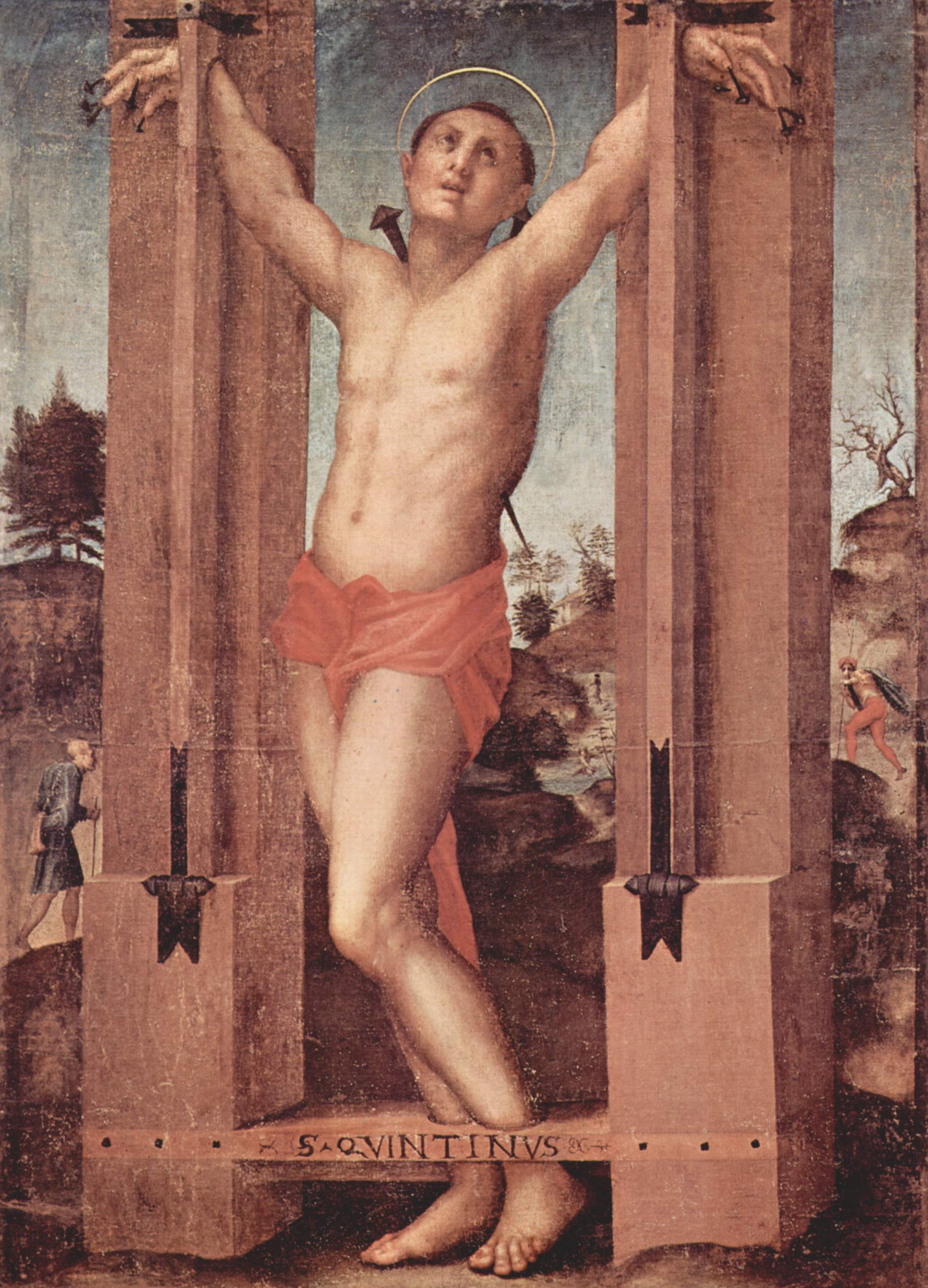
The Battle of Le Cateau was fought on 26 August 1914

co/wikipedia
"Le Cateau was an artilleryman's battle, demonstrating the devastating results which modern quick-firing artillery using airbursting shrapnel shells could have on infantry advancing in the open. Holding their ground tenaciously against superior odds despite taking heavy casualties, by mid-afternoon, the right, then left flanks of the British, began to break under unrelenting pressure from the Germans. The arrival of Sordet's French cavalry acted as a shield for the British left flank, and supported a highly-co-ordinated tactical withdrawal despite continued attempts by the Germans to infiltrate and outflank the retreating British forces.
That night, the Allies withdrew to Saint-Quentin. Of the 40,000 Allied men fighting at Le Cateau, 7,812 were killed, wounded, or taken prisoner. Several British regiments had even disappeared from the rolls altogether.[citation needed] Thirty-eight artillery pieces (guns) were abandoned to the advancing Germans, the majority having their breech blocks removed and sights disabled by the gunners before retirement."

"Triple Entente "
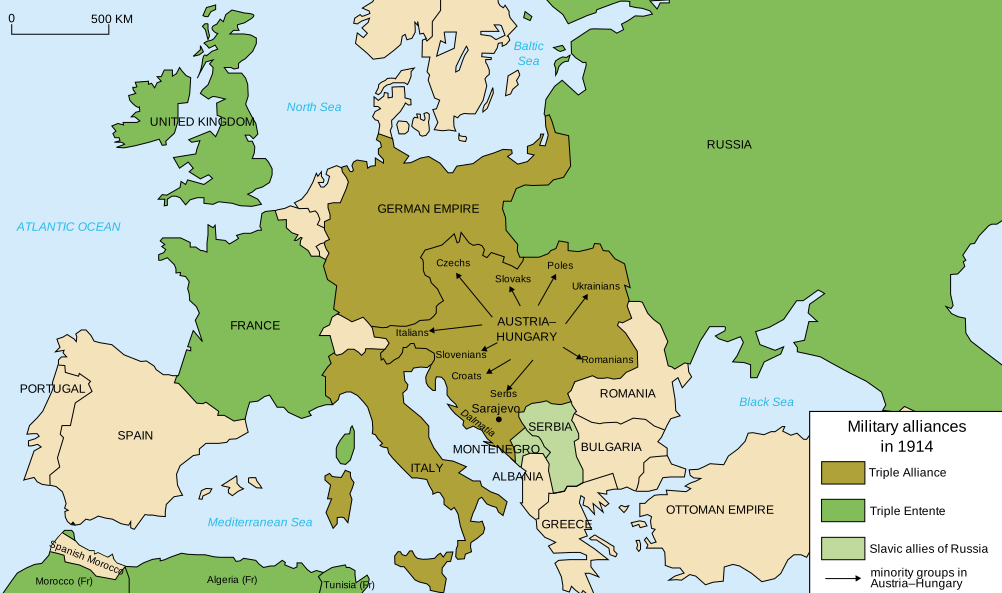
"The Triple Entente (from French entente [ɑ̃tɑ̃t] "good will") was the name given to the alliance among Britain, France and Russia after the signing of the Anglo-Russian Entente in 1907. The alliance of the three powers, supplemented by various agreements with Portugal, Japan, the United States, Brazil, Canada, and Spain, constituted a powerful counterweight to the Triple Alliance of Germany, Austria-Hungary, and Italy. (Italy had concluded an additional secret agreement with France, effectively nullifying their alliance with Germany.)"

Sunday, 18 September 2011


Saturday, 17 September 2011


Monday, 5 September 2011
Saturday, 3 September 2011
Carmen Herrera
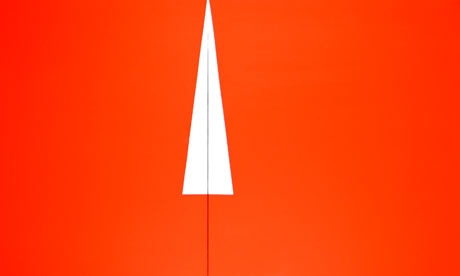
Carmen Herrera.
Red with White Triangle (1961)
Acrylic on canvas
48 x 66 inches
Private Collection, New York
Subscribe to:
Comments (Atom)